Gettting to Know Myself
Building Relationships with Students: Lunch with Teacher
I've seen several posts asking about how to build relationships with students, so I wanted to share some of the things I've done for the past nine years to build relationships with my students.
Lunch with teacher is by far one of the most popular relationship builders I've done with students. Twice a month until I've made it through my entire class I randomly select 5 students to invite to lunch. I set up a time the week before for them to put their heads together and come up with what we're having and then I make it up over the weekend and pick them up after recess to join me for lunch either in our room or at a table in the cafeteria depending on their preference.
Creating Your Own Math Notebook
Over the past 10 years I've created notes for nearly a dozen different math, language arts, and science curricula, and I always start by looking at the structure of the textbook since most follow a consistent formula from lesson to lesson.
In the curriculum my school uses the first page of each lesson is usually an info dump or a think about it type of problem. With the exception of a few lessons this part usually isn't student friendly, leads to a lot of frustration, and has too much consolidated info, so I usually find the majority of the material for my notes on the second and third pages of each lesson in my book.
I try to limit what I put in my notes and spoken lesson to the 2-3 most important sentences from the book's lesson with blanks put in not for the bolded vocabulary words but for the smaller, yet still critical for understanding, words.
I've also noticed that a lot of curriculum give examples of how they want things worked out, and I love using these in my notebooks since I can highlight alternate ways to do the problems, have students compare back to the book, and have the kids use them for hints and answer checks.
I've found that basing my spoken lesson off the notebook I've created for my students helps me to target my instruction and keep each lesson straightforward and easy to understand.
The majority of my lesson and notebook is based off the book's examples with room for the kids to work them out themselves.
Classroom Management that Doesn't Break the Bank Part 1
If you're unsure what I'm talking about, classroom economies are an intensive based type of classroom management system involving fake money that kids can earn and loose money based on behavior, and they can use their money to purchase things within the classroom.
Over the years I've been asked if I feel that I'm bribing my students or teaching them bad habits through monetizing tasks and behaviors instead of relying on intrinsic motivation, and I think the age and perspective of my student is a huge factor in why I feel comfortable using a classroom economy.
I teach 6th grade and my students respond very well to the idea of school as their "job," so getting paid for certain aspects of school (coming to school on time and prepared, being a good roll model to younger students, turning in their homework, and doing their classroom jobs) really resonates with them.
However, there are certain things I won't pay students for like doing their work in class or being respectful to me and other students. They can also get charged a fine (usually $10) if they break our classroom rule of "do nothing to keep others from learning."
"How do You Create Worksheets?"
I recently had a student teacher reach out to me with the question "How do You Create Worksheets?"
I wasn't the first person they had asked, but they gotten a lot of very general answers like "in Power Point" or "on Google Slides." However, I got the impression they were looking for something deeper, more of a how to than a where.
I wanted to share my answer in case anyone else out there had a similar question.
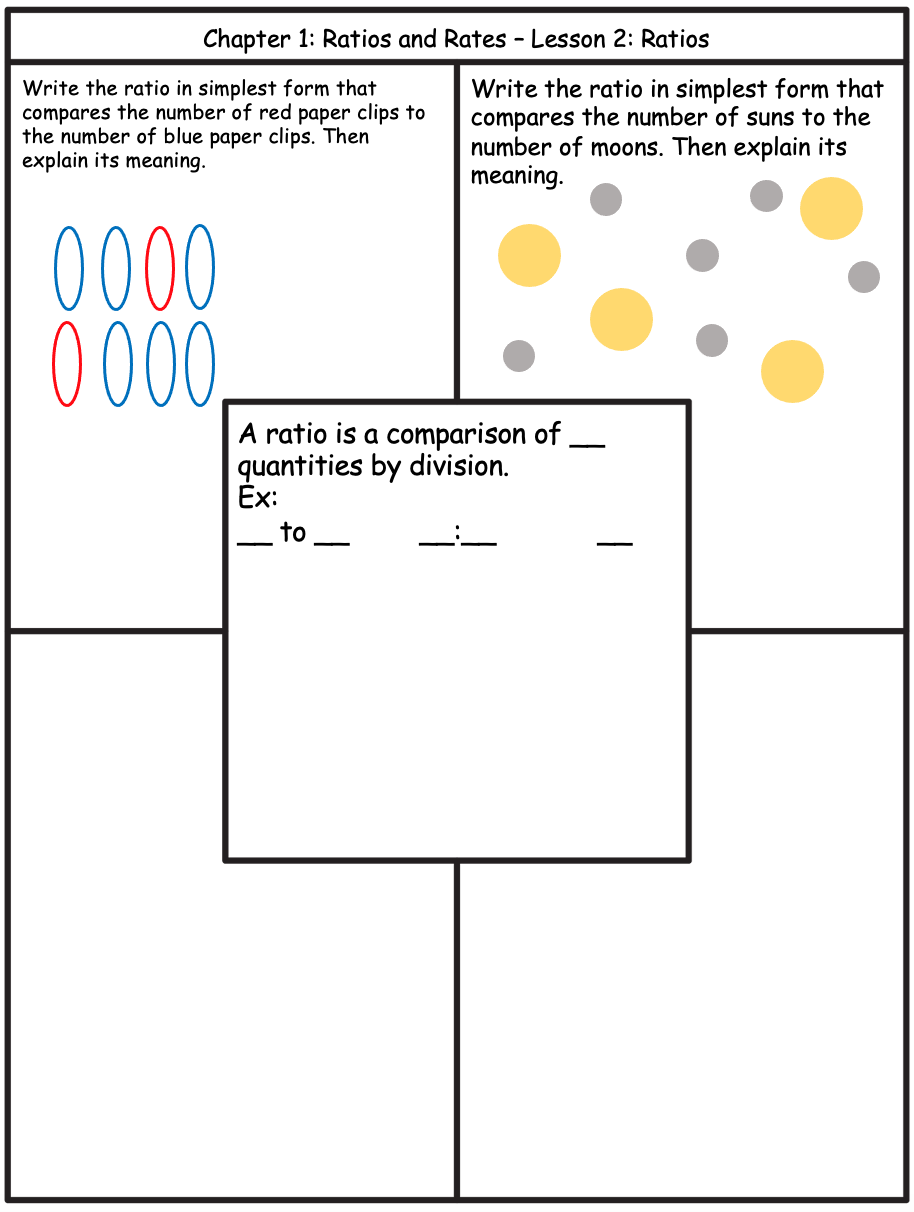
I start out with a basic 7.5x11 Power Point Slide since you can put the elements flush against the edge of the slide and still end up with a gutter when its printed off, and Power Point is also easy to upload to Google Slides if you decide you do want it digital.
When I'm setting up the formatting, I'll often use several text boxes across the page to break things up and create a visual transition from one part of the task to the next. For fonts I like to use something crisp like Calibri or Comic Sans (my fav because of its readability and formatting for the "a") since dyslexia is very common in the community where I teach.
On occasion I'll use a little black and white clipart along the sides to spice things up, but I usually find it just clouds the "lines" of the layout and makes it hard for some of my students to follow the flow of the worksheet.
For variety and inspiration, here are a few examples of worksheets I've created.
This is one of my more recent worksheets. Here is the basic template I created to base all my vocabulary mapping worksheets off of. Having a base template for each type of assignment helps create a cohesive flow and gives the tasks consistency.
I
like to keep color graphics out of my worksheets, but I like to add a
pop of color into some of my reference sheets, especially if the images
are "busy" since I can use the colors to separate things out a bit.
I throw in a little Word every once in a while for very basic or highly compartmentalized worksheets because I prefer the table function in Word to that in Power Point.
I like to spice up my creative process here and there to keep things interesting, but these are my tried and true building blocks for creating worksheets and other things to use in my classroom. If you're trying to get started creating your own worksheets and have other questions about the process please let me know, I love to talk teacher shop.How to Greive for Someone you Never Knew
You make a 3? "Kobe!"
One of your classmates brings random cupcakes to class? "Kobe!"
Your friend asks a girl to mini prom and gets turned down? "Kobe!"
Even knowing next to nothing about the man other than he's famous, he played basketball, he died in a helicopter crash, and his daughter with him the one thing I did know about his death was that it would devastate several of my students and I wouldn't be there to help them through it. I almost immediately picked up my phone and fired off a text to my teacher bestie and my sub.
Other than that my plan was to by and large ignore it, but then I went on Facebook; the words no fairy tail ever started with...
A lot of teachers were talking about what if anything they should do to address, acknowledge, pay homage to the life and death of Kobe Bryant. The responses were a mixed bag and everyone had their own reasoning to back it up. Lets just say I learned more about various aspects of Kobe Bryant's life than I ever wanted to know.
Then I started getting texts from parents whose kids had been effected and coworkers who were unsure how to address the whole range of reactions they knew they were going to see in their rooms on Monday. I could name at least 2 boys off the top of my head who would be devastated, who according to parent texts already were beside themselves. Then on the other hand, I knew at least 2 other kids who would be next to clueless, perhaps even more so than I was. Add to that a wide range of kids with past traumas, dramatic kids, and kids who would be unsure how to feel about the loss not only of a person but of a commonly used expressive tearm, and I realized that I had to do something to give those who needed an outlet and outlet while respecting those who didn't feel the need to grieve.
So, between conference sessions I created a basketball acrostic poem using the word "baller," which like Kobe is a common term used in my room both as a replacement for cool and to describe someone who plays basketball. After a lot most angsting and debate than should have gone into choosing a graphic for an acrostic poem I settled on basketball faces showing a wide range of emotions.
In the end I intentionally made the prompt very open that students in our basketball centric town can use to express their feelings and opinions about what has happened, basketball, their favorite basketball team, their intramural basketball team, or even their own experiences or love for basketball.
Just being able to tell coworkers and parents that, even from 600 miles away and even though I couldn't physically be there for my students, I had a plan seemed to help, not just them but also me. If you need a resource for next week, a place for those affected to get their feels out while still giving those not affected a way to avoid being forced to talk about feelings they don't have for a man they don't know, here's a link to my Baller Acrostic Poems, which I'm marking as free for the rest of the week to make it easier for any teacher who needs an activity like this to gain access to it.